
Your Guide to the Best Forex Prop Firms
Compare funding challenges, payout models, and trading platforms across 37+ expert articles. Find the prop firm that matches your trading style.
Explore Prop Trading Topics
Comprehensive coverage of every aspect of proprietary trading
Unleash Your Prop Trading Potential
Everything you need to navigate the prop trading landscape
Empower Your Forex Prop Trading Journey
Navigate your path to funded trading with expert insights and real-time market analysis. Access comprehensive resources that help you make informed trading decisions, understand challenge rules, and maximize your profit potential.
View Resources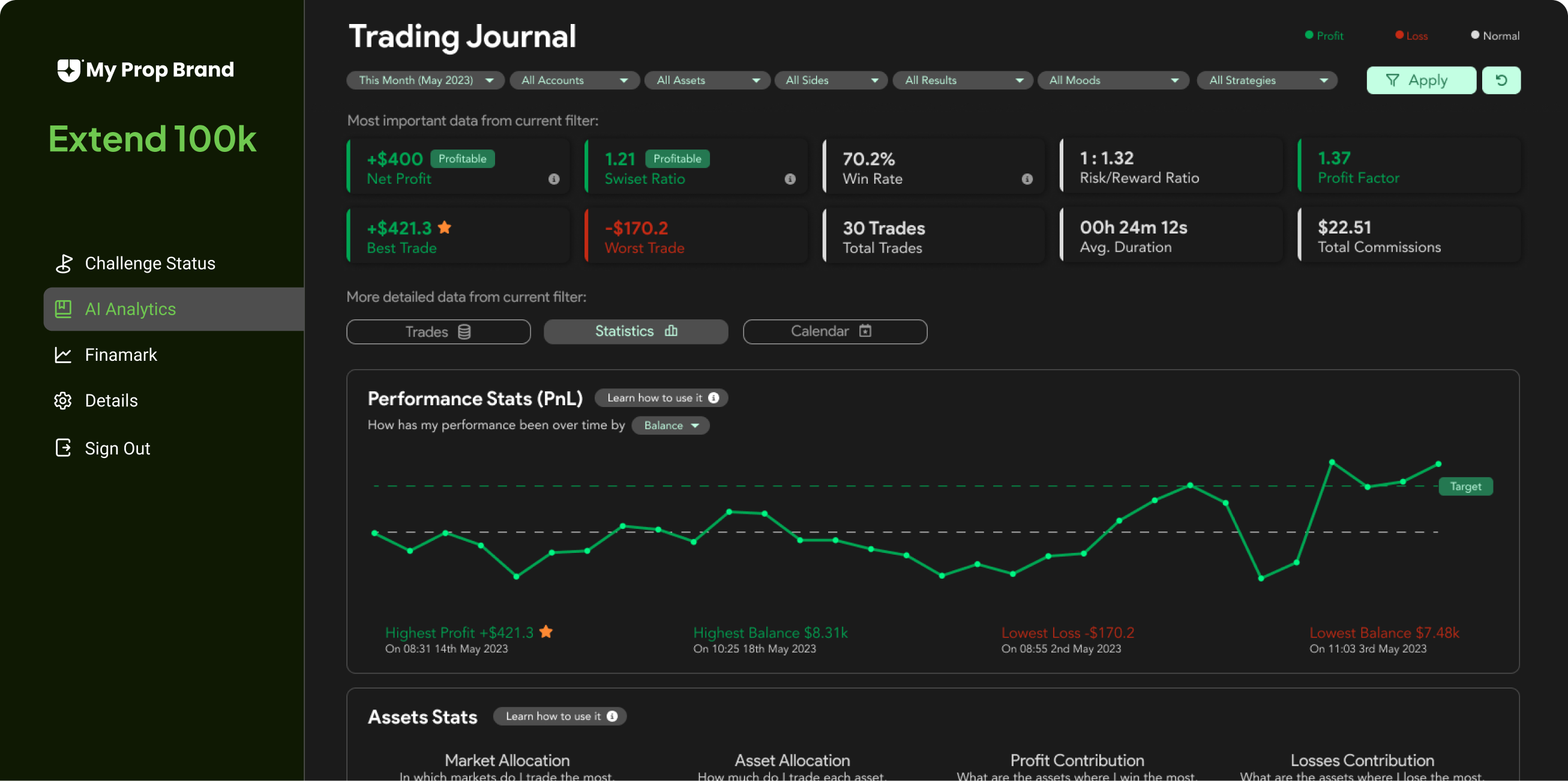
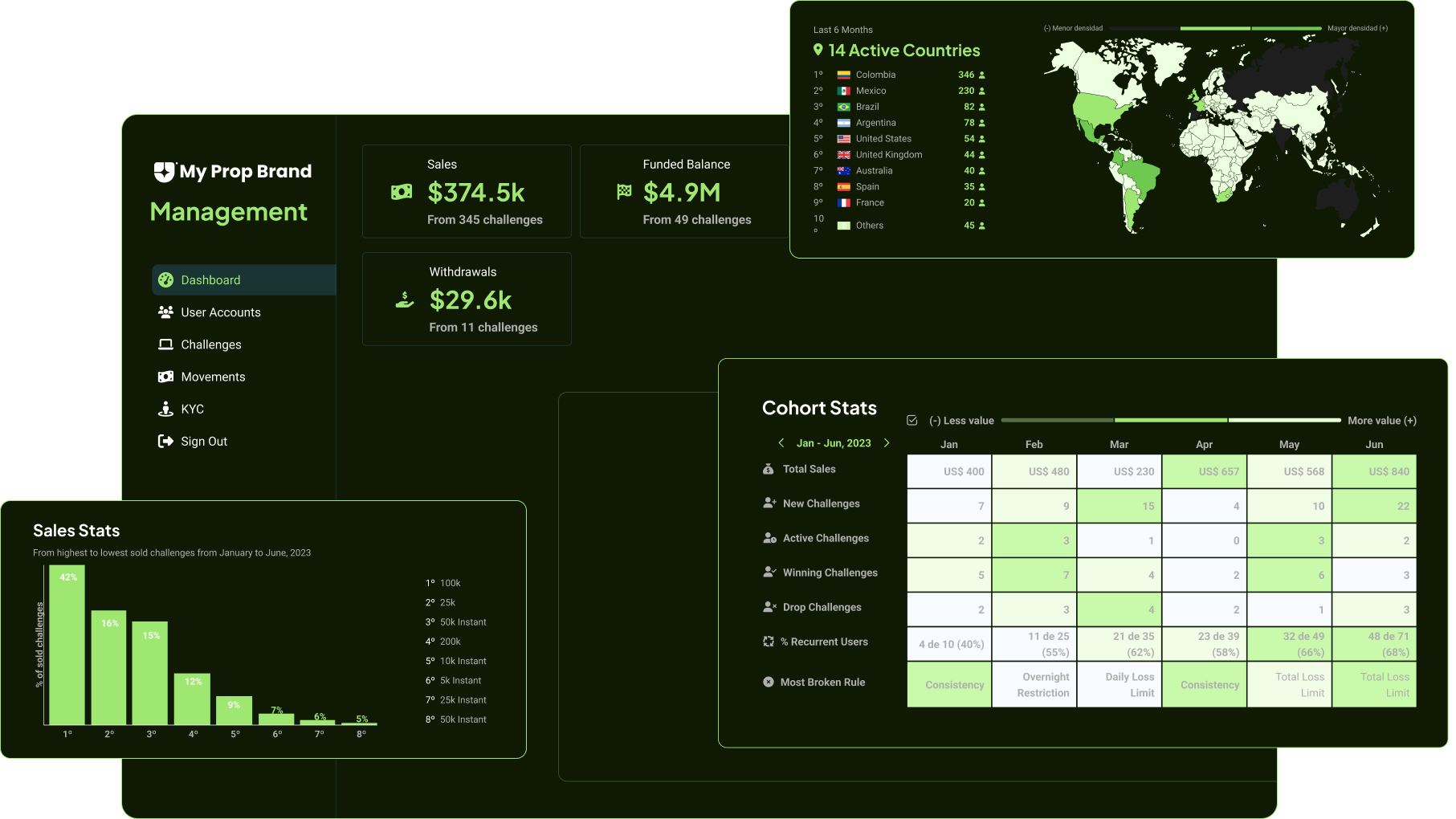
Simplify Your Business Operations
Monitor performance, supervise traders, and make data-backed decisions with ease. Our comprehensive guides cover everything from challenge setup to payout management and compliance requirements for prop trading firms.
Learn More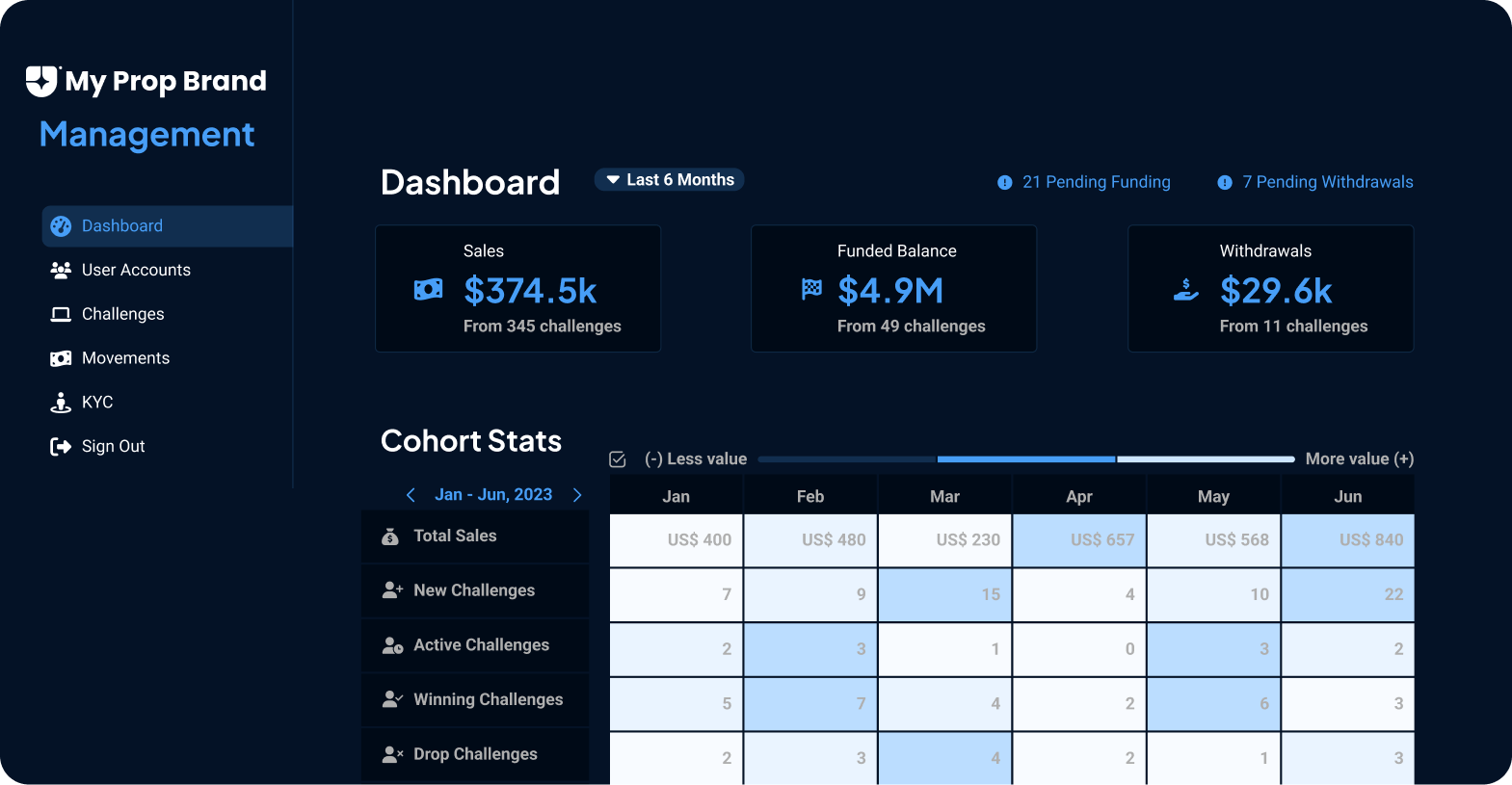
Integration with the Most Powerful Trading Platforms
All major trading platforms covered in our expert analysis
Real-Time Prop Trading
Knowledge Hub
Access up-to-date articles on challenges, funded accounts, and prop firm developments. Our expert team continuously monitors the prop trading landscape to keep you informed.
View Latest Articles
Fraud Detection & Firm Safety Analysis
Stay ahead of risks with our comprehensive prop firm safety analysis. We review payout histories, trader feedback, and operational transparency to help you choose trustworthy firms.
View Safety Reviews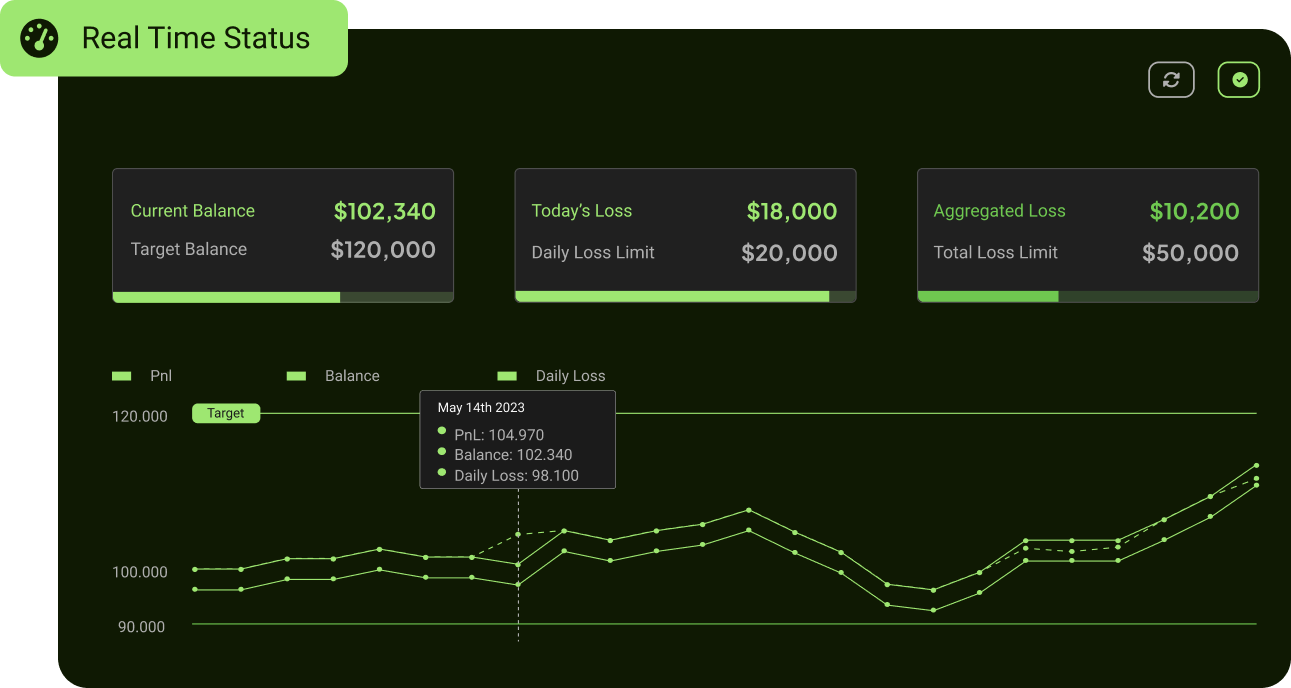
Popular Tags
Browse by specific trading topics and keywords
The Complete Guide to Forex Prop Firms: Models, Funding & How to Choose the Right One
A comprehensive resource for traders exploring proprietary trading firms — from challenge structures and payout models to capital management and competitive evaluation frameworks.

Active forex trading at a professional prop firm desk — where strategy meets capital.
Overview of Forex Prop Firms
Forex proprietary trading firms, commonly known as forex prop firms, serve as specialized entities within the forex trading industry. These organizations provide talented traders with access to substantial trading capital, allowing them to execute trades on behalf of the firm without risking their own funds directly.
The primary role of a forex prop firm is to identify skilled traders through rigorous evaluation processes and, upon successful assessment, grant them the resources necessary to maximize trading potential. Forex prop firms differ significantly from other trading entities such as retail brokerages or hedge funds.
Note: Prop Firms vs. Brokers
While retail brokers act as intermediaries between individual traders and the forex market, prop firms operate as principal trading entities with internal capital pools — a fundamentally different relationship.
Unlike hedge funds, which pool capital from multiple investors and often rely on managed strategies, prop firms focus on empowering individual traders with allocated funds to generate trading profits that benefit both parties. This structure enables traders to leverage larger positions than they might typically access with personal capital, offering greater opportunities for profit generation and skill development.
Forex prop firms are specialized capital providers that empower traders through strategic funding and operational support — their unique position as internal trading entities differentiates them from all other market participants.
Understanding the framework and function of forex prop firms is fundamental to selecting the right trading environment. The core advantage of participating in a forex prop firm lies in the synergy between talented traders and financial resources. By providing the capital, the firm reduces the trader's personal financial burden and risk exposure, while the trader's expertise aims to turn market opportunities into profits.
This partnership typically involves strict compliance with risk management protocols, profitability targets, and trading discipline — elements that ensure sustainable trading practices and long-term mutual benefit. Furthermore, forex prop firms often offer comprehensive support systems, including advanced trading platforms, professional analysis tools, and mentorship programs.

These benefits collectively contribute to creating an environment where experienced traders can thrive while novice traders receive guidance and resources essential for their growth. The focus remains on leveraging specialized skills and market knowledge, rather than solely capital ownership, to generate returns in the dynamic world of forex trading.
In summary, forex prop firms are specialized capital providers within the forex industry that empower traders through strategic funding and operational support. Their unique position as internal trading entities differentiates them from other market participants, emphasizing skill-driven profit strategies and collaborative growth within the forex trading landscape.
Types of Forex Prop Firm Models
Forex prop firms employ various operational frameworks to cater to traders with different experience levels and risk appetites. Understanding these models helps traders select the one that aligns with their trading style and goals.
Challenge-Based Programs
This model requires traders to pass a simulated trading challenge demonstrating their ability to adhere to strict risk management and profit targets. Successful completion grants access to funded trading accounts. These challenges often involve trading within predefined parameters such as maximum drawdown, profit targets, and trading days, ensuring that only disciplined traders progress.
Tip: Challenge Models Are Most Common
The two-step challenge model is the industry standard. Most traders encounter a Phase 1 profit target of 8–10%, then Phase 2 at 5%, before accessing live funded capital.
Instant Funding Firms
These firms provide immediate access to trading capital without the need for challenges or assessments. Traders are typically assigned an account from the outset, often with predetermined risk limits. Instant funding is suitable for experienced traders who have a proven track record and prefer to bypass the evaluation phase.
No-Challenge Options
Some prop firms offer a straightforward funding process where traders can apply directly for a funded account without undergoing challenges. These models usually have specific eligibility criteria, such as trading experience or a verified trading history, simplifying the onboarding process.

A professional trading environment — the kind of infrastructure top prop firms provide to their traders.
Standard Prop Trading Model
This traditional model involves firms providing traders with a trading account funded by the firm itself. Traders operate with the firm's capital, bearing the risks and rewards directly associated with their trading decisions. Typically, traders earn a percentage of the profits generated, with some firms offering minimum salary guarantees or performance-based bonuses.
Split Funding Model
Some firms operate on a hybrid basis, where traders initially use their own capital but have the opportunity to access additional funds from the firm as they demonstrate trading competence. Profit sharing is usually structured to incentivize continued performance, with traders earning a larger percentage of profits as their account sizes increase.
| Model Type | Evaluation Required | Profit Split | Best For | Entry Cost |
|---|---|---|---|---|
| Challenge-Based | ✓ Yes | 70–80% | Developing traders | $100–$600 |
| Instant Funding | ✗ No | 50–70% | Experienced traders | $300–$1,500 |
| No-Challenge | ✗ No | 60–75% | Verified track record | $200–$1,000 |
| Standard Prop | ✓ Interview | 50–80% | Professional traders | None |
| Split Funding | ✓ Performance | 60–90% | Scaling traders | Varies |
Starting a Forex Prop Firm: Key Steps

Launching a forex prop firm involves a strategic approach to establish credibility and operational efficiency. The process begins with comprehensive market research to identify niche opportunities and assess the competitive landscape. Securing adequate capital is essential, often requiring substantial initial investment or forming strategic partnerships with investors.
Legal and regulatory compliance are critical. Establishing clear operational policies, risk management protocols, and profit-sharing arrangements helps maintain transparency and trust. Developing a proprietary evaluation process or adopting existing challenge-based methods can streamline trader onboarding.
Additionally, investing in robust trading infrastructure — including high-performance trading platforms, risk management software, and professional support staff — lays the foundation for effective operations. Building a reputable brand within the trading community also involves transparency about funding terms, trader support systems, and success stories.
Warning: Regulatory Compliance is Non-Negotiable
Prop firms operating without proper legal frameworks risk significant penalties. Ensure compliance with local financial regulations and clearly define whether your firm falls under securities or commodities law before launch.
Marketing strategies should focus on targeting skilled traders, offering competitive profit splits, and emphasizing the firm's reliability and commitment to trader development. As the firm grows, continuously refining internal processes and staying abreast of geopolitical and market developments ensures sustained competitiveness.
- Conduct comprehensive market research and competitive analysis
- Secure initial capital through investors or strategic partnerships
- Establish legal entity and ensure regulatory compliance
- Design an evaluation process (challenge-based or direct application)
- Invest in high-performance trading technology infrastructure
- Build risk management and compliance protocols
- Create transparent profit-sharing and payout structures
- Develop marketing targeting skilled and experienced traders
Funding & Capital in Forex Prop Trading
Forex prop firms serve as vital sources of trading capital, enabling traders to access larger positions and leverage that may not be available through individual accounts. These firms typically allocate predetermined funds based on traders' demonstrated skills, adherence to risk protocols, and trading history.
Access to substantial capital is one of the primary advantages of engaging with a forex prop firm — it allows for larger position sizes, portfolio diversification, and the ability to exploit high-probability setups without retail constraints.
Real-time analytics dashboards help traders and firms monitor capital allocation and performance metrics.
The process of acquiring funding usually involves passing an evaluation phase, where traders must meet specific performance criteria within set parameters, such as profit targets, risk controls, and trading discipline. Once funding is secured, proper capital management becomes essential for sustained success.
Capital Management Protocols
Traders are expected to maintain disciplined risk parameters, including daily and overall drawdown limits, to protect the firm's assets. Effective capital management involves not only controlling risk but also optimizing trading strategies to generate consistent revenues. Prop firms often monitor traders' activities continuously, employing technology to track performance, identify deviations from risk protocols, and ensure compliance.
Key Point: Drawdown Limits Protect Everyone
Most prop firms enforce a 5% daily drawdown and 10% maximum drawdown rule. Violating these limits typically results in immediate account termination — so risk management isn't optional.
Fixed vs. Scaling Funding Models
Different models of capital allocation exist within the landscape of forex prop trading. Some firms offer fixed funding amounts to traders, providing structure and clarity from the outset. Others adopt a scaling approach, increasing trading capital as traders demonstrate consistent profitability and risk adherence over time. This progressive funding model encourages continual development and rewards disciplined trading behaviors.

Fund allocation strategies are often complemented by technological tools that monitor trading activity in real-time. These systems automatically track compliance with risk limits, assess performance metrics, and generate detailed reports. Such oversight ensures that traders maintain discipline, minimizes unauthorized risk-taking, and promotes transparency within the trading environment.
Effective capital and risk management are vital for maintaining sustainable growth in forex prop trading. They help to shield the firm's assets from volatile market conditions while providing traders with the necessary resources to capitalize on trading opportunities. This dual focus on growth and risk mitigation contributes to a stable and resilient trading infrastructure.
Risk & Leverage Structures
Different prop firm models also vary in how they implement leverage and risk controls. While high leverage can amplify gains, it also raises the stakes significantly. Effective firms balance leverage with strict risk management rules, including daily drawdown limits, maximum position sizes, and mandatory stop-loss measures to protect both the trader and the firm's capital.
Ownership and Profit Sharing Dynamics
The profit-sharing arrangements vary across models, typically ranging from 50% to 80% in favor of traders. Some firms offer tiered splits based on account performance, while others may adopt fixed percentages. Equity ownership models are less common but are used in scenarios where traders are considered partners or stakeholders, aligning long-term interests with the firm's growth.
Tip: Look for Scaling Plans
The best prop firms offer scaling plans where consistent profitability unlocks access to higher capital tiers — some reaching $500K–$1M+ for top performers. Always ask about the scaling roadmap before joining.
Operational Flexibility and Support Structures
Whether a firm adopts a fully managed or semi-managed approach impacts the trader's experience. Fully managed firms usually intervene more actively, providing tailored risk management or trading signals, whereas semi-managed or autonomous models emphasize trader independence. Professional support, including risk analysis, trading psychology coaching, and technical assistance, is tailored to fit the specific model chosen.
By comprehending these varied models, both traders and firms can establish mutually beneficial arrangements that leverage structured risk management, scalable funding, and performance incentives, fostering sustainable growth within the competitive landscape of forex prop trading.

Advanced trading platforms with real-time analytics are a hallmark of top-tier prop firms.
Competitive Aspects of Forex Prop Firms
In the dynamic landscape of forex prop trading, competition among firms is a pivotal element that influences both trader behavior and firm standards. These firms often employ challenge formats and performance metrics designed to identify and promote top talent. The competitive environment pushes traders to refine their strategies, adhere strictly to risk management protocols, and demonstrate consistent profitability.
The competitive landscape within the forex prop trading sector fosters a culture of excellence, innovation, and resilience — rewarding disciplined traders and driving continual improvement in strategies and risk management.
Many prop firms leverage structured evaluation processes where traders undergo rigorous testing through simulated or live accounts. Performance is gauged based on specific criteria such as profit targets, drawdown limits, and consistency over time. Firms might include tiered challenges, where traders can advance through levels by meeting incremental performance benchmarks, or skill assessments that weigh trading discipline and risk control alongside profitability.
Performance Metrics & Evaluation Criteria
Evaluation criteria tend to encompass various trading metrics, including win rates, average profit per trade, and adherence to defined risk parameters. Such metrics ensure that traders are selected and retained based not only on profits but also on responsible trading behaviors. Firms aiming for competitive advantage may also incorporate technological tools that track real-time trading activity, analyze performance fluctuations, and compare individual results against firm-wide benchmarks.
Note: Key Performance Indicators
Top prop firms evaluate traders on: profit factor (target 1.5+), win rate (40–60%), maximum consecutive losses, consistency score, and adherence to daily risk limits. Raw profitability alone is rarely sufficient.
Adaptability and Continuous Learning
In a highly competitive environment like forex trading, adaptability is a key trait that distinguishes top traders. Firms place a premium on traders who can rapidly adjust their strategies in response to market volatility, news events, and economic shifts. Ongoing education, case studies, and performance reviews are integral to fostering a growth-oriented mindset among traders, encouraging them to refine their techniques and keep up with evolving market trends.
Regular assessments and training modules are used to keep traders aligned with best practices, while also recognizing innovative approaches that can lead to superior results. This dynamic fosters an environment where continuous improvement is rewarded, not just immediate gains, thereby maintaining a high standard of trading excellence within the firm.
Driving Innovation and Resilience

Resilience under pressure and innovative thinking form the backbone of successful forex prop traders. Competition pushes traders to develop unique strategies that can withstand market shocks and exploit emerging opportunities. Moreover, firms often encourage the sharing of knowledge and collaborative problem-solving, which further enhances the collective expertise and adaptability of their trading teams.
In such a competitive landscape, traders who demonstrate resilience and strategic innovation are often positioned for long-term success, providing valuable contributions to the firm's stability and growth. The environment incentivizes disciplined risk-taking, strategic planning, and mental toughness, essentials for navigating the complexities of the forex market.
Performance analytics tools enable forex prop firms to evaluate traders objectively — creating a meritocratic environment where superior traders are recognized and rewarded based on their actual results, not just potential.
Insights into Selection & Management of Forex Prop Firms
For traders seeking to maximize their potential within the foreign exchange market, understanding how to select and efficiently manage involvement with reputable forex prop firms is essential. These firms often offer structured programs, technological tools, and risk management frameworks designed to support trader growth and stability.
Evaluating the Firm's Infrastructure and Support Systems
When considering a forex prop firm, assess the robustness of its technological infrastructure. Reliable platforms with high execution speed, comprehensive analytics, and real-time data feeds are fundamental to informed decision-making. Additionally, evaluating the support systems — such as mentorship programs, performance reviews, and educational resources — can significantly influence a trader's development and success.
Key Point: Due Diligence Before Joining
Before paying any challenge fee, verify: firm's payout history, community reviews on forums like Trustpilot and Reddit, withdrawal processing times, and whether the firm is a simulation-only or real capital model.
Risk Management and Capital Allocation Strategies
Effective risk management is a hallmark of successful forex prop trading. Firms that emphasize stringent risk policies — such as maximum drawdown limits and position sizing guidelines — help protect both the firm's capital and traders' careers. These standards ensure traders operate within defined risk parameters, fostering a disciplined trading environment.
Moreover, capital allocation strategies should be transparent and aligned with individual trading styles. Proper funding models allow traders to leverage the firm's capital without overexposing themselves to unnecessary risks, thereby enhancing consistency and long-term profitability.
Monitoring Performance and Scaling Opportunities
Consistent performance tracking is vital for traders in prop firms. Regular assessments based on well-defined metrics guide traders in refining their strategies and demonstrate progress to the firm's management. Advanced analytical tools and performance dashboards enable ongoing evaluation and feedback, which are critical for growth and scaling trading operations.
Successful traders often identify scaling opportunities — such as increased capital allotments or access to more sophisticated trading instruments — once they consistently meet performance benchmarks. These opportunities facilitate the transition from trial phases to more significant trading roles, optimizing potential return on investment.
Building Long-Term Success within Forex Prop Environments
Long-term professional development in forex prop trading relies heavily on adherence to best practices in discipline, strategy adaptation, and continual learning. Maintaining a trading journal, actively participating in knowledge-sharing sessions, and staying updated with industry developments enable traders to evolve alongside market trends.
Further, establishing strong communication channels with firm management and fellow traders promotes a collaborative environment. This network provides avenues for mentorship, shared insights, and collective problem-solving — cornerstones for sustained success. Continuous performance analysis aids traders' growth and success within forex prop firms.
✅ Key Takeaways
- ✓ Forex prop firms provide trading capital to skilled traders, eliminating the need to risk personal funds while sharing in the profits generated.
- ✓ The challenge-based model is the most common entry point — traders must demonstrate consistent profitability within defined risk parameters to access funded accounts.
- ✓ Profit splits typically range from 50–80% in favor of traders, with scaling plans allowing top performers to access capital pools of $500K–$1M+.
- ✓ Rigorous risk management — including daily drawdown limits, maximum position sizes, and stop-loss requirements — is non-negotiable at reputable firms.
- ✓ Competitive evaluation frameworks reward not just raw profitability but also trading discipline, consistency, adaptability, and emotional resilience.
- ✓ When selecting a prop firm, assess technological infrastructure, payout history, community reputation, and the transparency of capital allocation policies.
- ✓ Long-term success in prop trading depends on continuous learning, performance tracking, and leveraging the firm's mentorship and analytical tools.
